Hermes Agent Quicksilver Update: How to Turn It Into Your Chief of Staff
The Quicksilver update unlocks smart approvals and background jobs that turn Hermes agent into a real chief of staff.

Hermes is the most powerful agent on the planet, and they just dropped Quicksilver, which unlocks new capabilities, but only if you know how to use them correctly. In this video, I'm going to show you exactly how to turn Hermes agent into your chief of staff, one that's way smarter, saves you hours of time, and even improves any design that you have.
If you haven't already, grab a coffee, and let's dive straight in.
The Quicksilver Update
The Quicksilver update was the latest update out there, and it's not the Quicksilver from X-Men, if that's what you're thinking about. It's actually way cooler than that, and it does unlock incredible capabilities.
Essentially, when we think about the Quicksilver update, there's a couple of things that it does. I'm going to show you three incredible use cases that will level up your Hermes agent, and a bonus fourth one that you have to leverage. It is ridiculous.
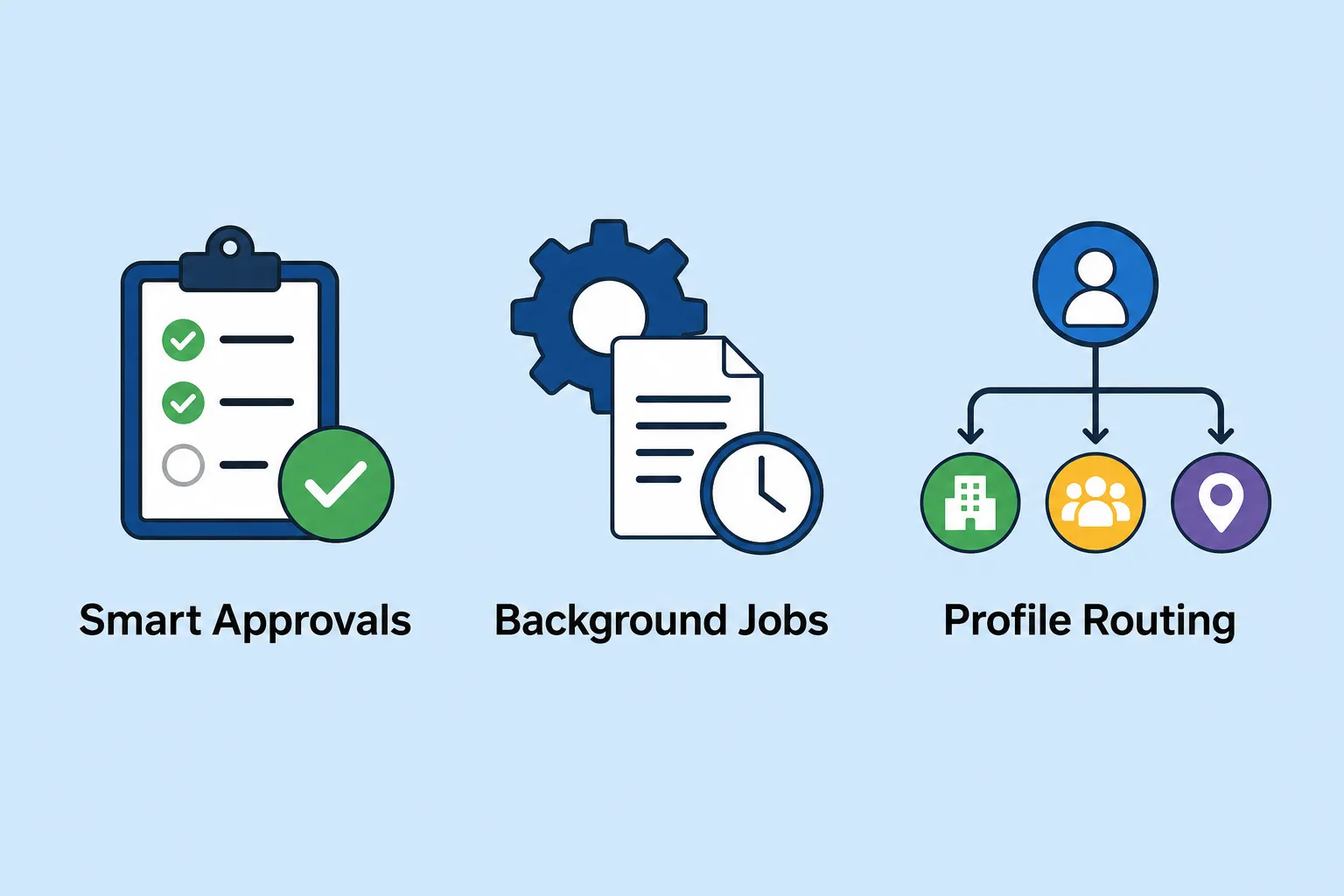
The backbone, the foundation of what enables these new capabilities, is the Quicksilver update. It's smart approvals, durable background jobs, delivery ledgers, profile routing, and per-task effort. I could talk about it for a while, but the best way to actually show you what these do is in an actual use case.
By the way, my name is Jack. I built and sold my last tech startup with a huge number of customers, and now I cover AI stuff that actually works.
Level 1: Turn Hermes Agent Into Your Knowledge Base

So let's talk about the whole knowledge side of things with Hermes. This is incredible. Let me give you a classic example. Let's say I'm having a conversation with Hermes agent. I'm going to pick the model GPT-5.6 Soul. That sounds fine.
I come down and say, "Hey there, could you just confirm which model I'm talking to right now?" I'm using this inside the Agentic Operating System for Hermes, the same one I build everything else out in. It's very, very cool. You can also do this in Telegram or the terminal. It just gives me loads of new optionality and functionality. And it confirms: "You're talking to GPT-5.6 Soul."
One very cool thing you can do with Hermes agent: let's say you find something you think is interesting. It could be educational, it could be a restaurant you want to check out, it could be anything, because your chief of staff crucially has to know all of your ideas. I'm going to show you how you can level this up in a big way.
Let's say we're living in Budapest, which is where I am right now, and I want a good restaurant recommendation, but I don't have time to read that article or watch that video. I can literally grab any YouTube URL and bring it straight to Hermes agent. Let's say I want to have a conversation with Grok 4.5, one of the latest models. Grok has new ones coming out, and I can just say, "Hey, which model is this?"
The reason I like using my operating system is because I get loads of additional context: information about the context window, what my limit usages are with Claude, what's taking up all of my free space, that kind of thing.
So I might say, "Hey, I want you to go ahead and learn this video, summarize it back to me in five crisp, short bullets, and then save it to your Obsidian memory so I can ask you questions about it whenever." Then I just drop in the URL, and just like that, it comes back with the five bullets explained, and it's saved.
Now, the cool thing about a chief of staff is that every piece of information we give it is stored in our memory system, which is amazing. But the best part is that it isn't just us who can give it that information, it could be our team. Let's say someone on your team says, "Hey, I think we can double our conversion rates if we did X," and they can message Hermes agent themselves, over text, connected via Telegram or iMessage, whatever you want.
What's cool is that if you want to create multiple profiles inside Hermes agent, you can just ask it to set itself up, and people can text it with their own profile. For example, you can say, "Give my brother his own profile so his messages don't land on my vault." The way it works is each profile gets its own config, skills, memory, session history, and credentials, but they all still share the same underlying Hermes install and the same bot when they send a message. It's basically whichever the host OS can reach.
So if you want to keep your own private Hermes agent, which is what I'd recommend, I wouldn't let anybody else message your own Hermes agent. But this is here for example: let's say you have a business, and this is a business assistant chatting to Hermes and connecting it to different accounts. You can do that the exact same way you created it. If not, you can get the ideas, forward them to Hermes agent, and then Hermes saves them so you can ask it any questions you want.
Level 2: Let Hermes Agent Handle Your Admin

Level one is the dynamic use of your knowledge, but level two takes it a complete step further, effectively solving the admin problem with Hermes agent.
The very first thing you need to do is send Hermes agent a prompt that says, "Hey, I want you to interview me about everything I do on a daily basis, and tell me ways you can help me save time and take admin off my shoulders." Once you've done that, you're going to want to connect it to what I'd call the core three: your calendar, your email, and even your calls.
For example, I personally use something called Granola. Any call I'm on, Granola joins the chat. They're not a sponsor of the video, but basically what that does is let Hermes agent go and listen to it and have that full context.
Once you've connected these to Hermes, it can go to a completely different level. For example, if I'm chatting with Hermes agent, I might say, "Hey, what's the title of the next appointment on my calendar?" But the coolest thing it does is drop me a daily brief, a daily insight digest, every single morning, of all the calls I have coming up that day and all the emails that are unread. It even drafts emails for me.
Personally, I use a piece of software called Zapier MCP. I can connect to platforms through Zapier that I don't really get access to anywhere else. Skool is a really good example of that, if you have a community, but the core one is also Microsoft Outlook, believe it or not, people find that really tough to connect to. I can permission-click all the permissions I want. For example, if you add an MCP server like Gmail, you can select, line by line, the things you want. I find this unbelievably helpful.
One of the reasons I like using Grok is that it can actually search X for me as well, a little side hack that's really helpful. So if I'm debating ideas, I can say, "Hey, go find me five posts with climbing levels of engagement in the last five days about Claude or Kimi K3," and it can do that because it has direct access to the corpus of information inside Grok.
Once you give it the connections to your meeting notetaker, your email, and your calendar, you can do something very interesting, and honestly, this is one of the most fun uses I find in Hermes agent. Go over to your Hermes agent and give it a proactive prompt. Say something like, "Every day I want a daily breakdown. Look at my calendars, look at my emails, look at my calls, and also look at everything that's happened in the week, and give me some specifics."
Now it's cool, I can query one agent with anything. For example, I had an idea earlier that I wanted to reply to a potential partner with, and I said, "Hey, go draft me an email," and it just did it for me instantaneously.
Smart Approvals
Now, that's interesting, but what makes this even more powerful is the Quicksilver update's smart approvals. If it's considering doing something safe, it will actually go ahead and just do it. This matters because an assistant that needs your permission for every single step can't work while you're asleep.
Imagine being the CEO of a company, and your chief of staff is always asking, "Is it okay if I send this email? Is it okay if I cover lunch for everybody today?" You'd never get anything done because you'd have to keep saying yes.
Before, you'd say, "Check my calendar at 7 a.m. and text me the day," and it would hit that first, then stop and ask you while you're asleep. And if you're asleep, you can't do anything because it's just stuck on approvals. I've given it commands before and come back an hour later to find it waiting because I hadn't said it was okay.
Now, with smart approvals, a second model reads each command first, waves through the harmless stuff, and blocks anything dangerous, only waking you for anything that's genuinely risky. That's the difference between a chatbot you have to babysit and an assistant that just cracks on and makes magic happen.
Level 3: Give Hermes Agent Taste and Design Skills
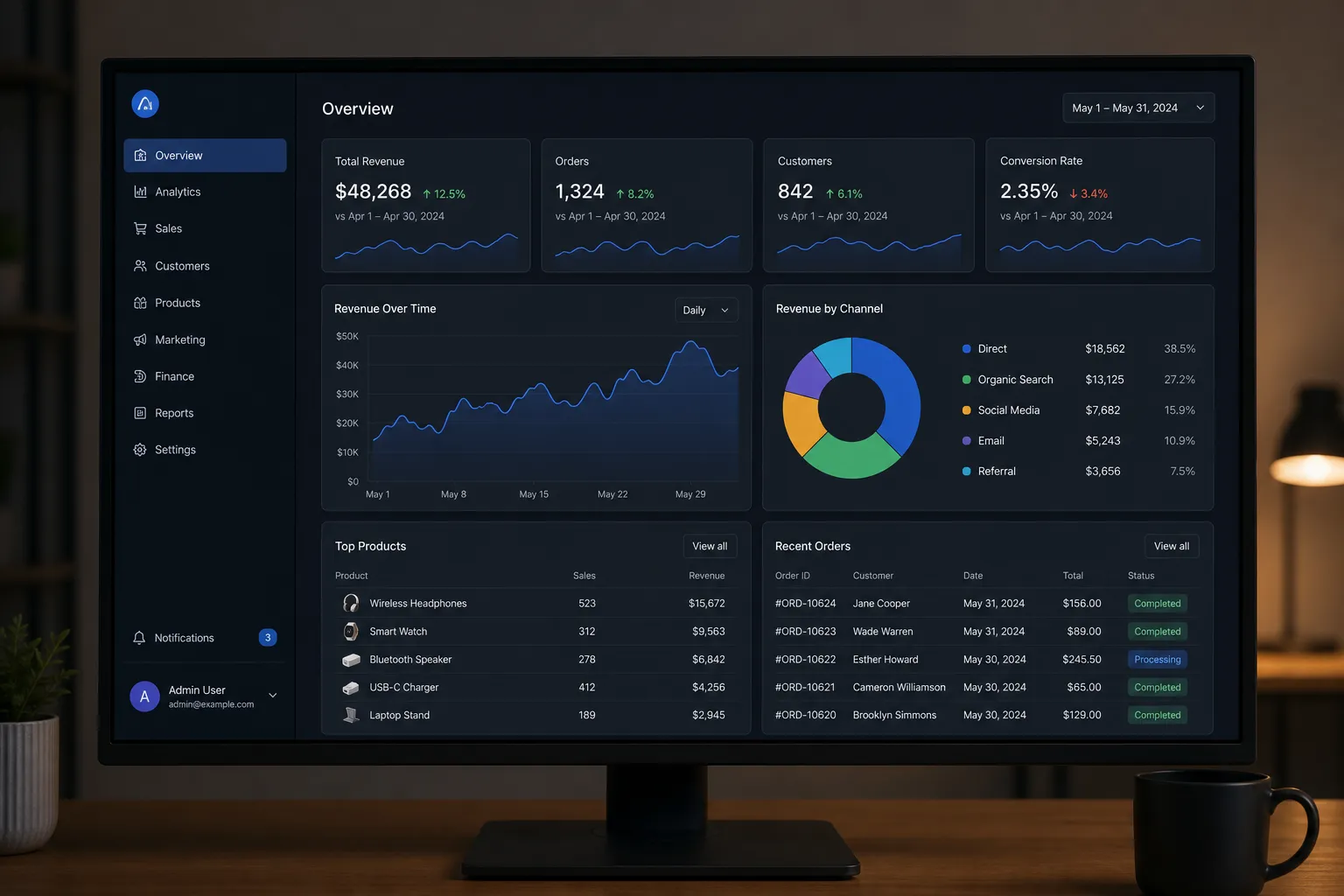
That takes us to level three, because our chief of staff also needs taste. Anything we ask Hermes agent to do sometimes needs it to build things like beautiful PDFs or documents, and it's so important that it has the ability to build something beautiful.
The incredible thing is we just got what's ranked number one in the world on an entire ranking system, and it shows that Kimi K3 is number one, even surpassing Claude Fable 5. That's great news, because it's roughly 30% of the cost. It's a little less token-efficient, but the fact we've got this open-weight Chinese model is so awesome for building anything we want inside Hermes agent.
Here's the key detail: we can tag in this Kimi K3 model and scale to anything we want, but we can take it a step further. Our agentic operating system can have a few things connected by OAuth, open authentication, meaning we can use our $20-a-month ChatGPT subscription to talk to it, and the exact same thing with Grok. But if we want to bring in models like Kimi K3, GLM 5.2, and the latest flavor of the week, we can do that with OpenRouter. So you want to create an OpenRouter account.
The other thing I like to give Hermes agent is the ability to create beautiful images and videos, like the graphics I build with these image generators. You can use something like Higgsfield, or another site called Kie AI, which lets you access all the different models for video and image generation. I spend hundreds of dollars on this stuff, but you can access the latest and greatest models and connect them to Hermes agent. So when I say "build me a presentation for LinkedIn" or "build me something beautiful," it can go ahead and do that.
Let's take a look at two quick examples. One is a presentation we delivered for Glideo, our speech tech startup, talking about a bunch of cool stuff. Let's say I have something I think is cool. I can literally give Hermes agent a link. I come over to a new chat and say something like, "I want to go ahead and use Kimi K3." I find Kimi K3, and I say, "Quote me two pages in this exact style," and do it for, say, cola. Page one should be why it's the best cola company in the world, and page two should be the flavors that it has. Then just give me a simple link to use.
I give it the example reference images, a reference link, and let it run. Kimi K3 is profoundly capable, and its performance per cost is insane.
While Kimi K3 is doing that, another thing I can do, if I open up a new window, is use any model I like. I've got Hermes here, which is handy, and if I want to chat with Claude Code, I click on Claude Code and pick the model I want, or Claude Code with Kimi K3, effectively anything I want, but I want to use the Hermes agent harness here. Let's use GPT-5.6 Soul. If you don't want to spend extra tokens, 5.6 Soul is actually quite powerful. GPT-5.6 Soul extra-high used about 70% fewer tokens than 4.8, so it's better than 4.8, only slightly defeated by Fable 5 and Kimi K3.
Since I've got GPT-5.6 Soul, I set it on high mode, actually extra high, and give it a prompt: "Hey, I have a meeting with my team later today. Do me one really crisp HTML overview talking about the numbers for this quarter and strategies to improve it. Make up something fictitious, make it look beautiful, and give me some nice HTML graphics as well, please." I send that off and GPT-5.6 Soul makes magic happen.
And then we have the result, and this is good. It's really impressive, and it doesn't look like AI slop. I gave it no direction, and look at this: we've got year-over-year figures, and it's really understood the whole slide divide, which is cool. Growth is diversifying, with numbers for product-led, outbound, and partners. We can show our growth, and at the bottom we've got demand health and activation mix. It's all random, made-up stuff, since we asked for an example, but we can give these commands to the model and it can make something fantastic.
But what's really interesting is Kimi K3: all I gave it was a website. And here's what it went ahead and did: "the best cola company in the world, obsessive recipe, real ingredients, ice cold everywhere, loved by billions." This has taken exactly the design I gave it, the same font, the same color scheme. It's crazy. "One recipe, four ways to drink it." It's absolutely nailed that, and all I gave Kimi K3 was an actual link.
Now we can use this to create images, videos, everything we want with our Hermes agent. Hermes gets the best taste and skills possible because it has this fantastic design system, and this helps from a cost perspective, because Fable 5 and Kimi K3 are more expensive than the cheaper models.
What's cool is a feature called model once, borrowing a model for one turn and then going straight back. So instead of saying "switch to a good model for this," you can say "use this model once." It uses that good model for the next turn only, then drops back on its own, and effort now goes up to max and ultra when a job actually earns it. You're getting the ultimate firepower only when you need it, without increased bills as a result. In other words, the cheap models handle the volume, and the expensive models do the one turn that actually needs the taste and design. If you're using GPT-5.6 Soul as your daily driver, you'll get incredible designs anyway, but you may want to tag in Kimi K3 for that extra finesse.
Bonus Level: Hermes Agent Improves Itself While You Sleep

Then the bonus level here is the ability of Hermes agent to actually improve while it sleeps. One of the developers behind Hermes agent did some work on this, which is really interesting: disconnected from the main Hermes repo, the idea is that while Hermes agent is sleeping, it assesses all of its own work.
The way that works is it audits all of its own recent failures, so anytime it couldn't do something or struggled, or said, "I really can't make that happen right now," it looks at that across real sessions, so it can evolve better skill files to not make that mistake a second time. That means you won't have the same error again and again, and it can even score each variant so the best one survives, and then it can open a pull request. It can start changing its own system, changing its own skills, which is incredible.
It's called a self agent evolution repo, and it explains exactly how this works. The cool thing about the Quicksilver update is that you get this cron audit history. What I highly recommend you do is grab any repo, and let's say we're chatting with Hermes OS. I can drop it in and say something like, "I want to create a system where you order everything on a daily basis. I want you to look at all of the times you failed, all your failed cron jobs." A cron job, by the way, just means when you set up a task, like, "Drop me a brief at 8 a.m. every morning," or "remind me of this after a certain amount of time."
Then I want you to go ahead and look at your skills: what are the skills you haven't used in a long time, what are the skills that aren't that great that could be improved? And what I want you to do is come back and set up a system where you're improving yourself on a daily basis using one of our OAuth models, and come back and give me those recommendations, and tell me in my morning brief exactly what you did as a result. Paste that into Hermes and watch it work its magic.
It's awesome that this cron audit history was unlocked by Quicksilver. But with an agentic operating system, we can take that a step further. We can also grab everything from Claude, grab our usage, and bring it all together into one system, getting actions and updates you can use on a daily basis, which is why the next thing to learn is how to use one of these agentic operating systems, which we're going to do together in this video.
Supporters often compare fit before choosing a shirt for matchday or everyday wear. Anyone reviewing club collections can use Atlético de Madrid jersey for fans(camiseta del Atlético de Madrid para aficionados) to focus on the matching design. Care instructions are worth reviewing so colours and printed details remain in good condition.