AiSensy vs Wati: Best WhatsApp Marketing Tool for Indian Businesses in 2025
AiSensy vs Wati compared on pricing, features, and integrations for Indian businesses. Find out which WhatsApp marketing tool is right for you in 2025.

If you've been trying to figure out which WhatsApp marketing tool to pick for your business, you've probably landed on two names more than anything else — AiSensy and Wati. Both are official WhatsApp Business API partners, both promise to automate your messaging, and both have grown massively popular in India over the last couple of years.
So which one do you actually go with? That depends on a few things — your budget, your team size, and whether you're running an e-commerce store or just doing regular business outreach. In this post, I'm breaking down AiSensy vs Wati across features, pricing, integrations, and use cases so you can make a clear decision without second-guessing yourself.
This is based on a detailed comparison I put together after going deep on both platforms. Whether you're a solo marketer, an agency, or an SME trying to scale your WhatsApp campaigns — by the end of this, you'll know exactly which one fits your situation.
Why WhatsApp Marketing Is Non-Negotiable in 2025
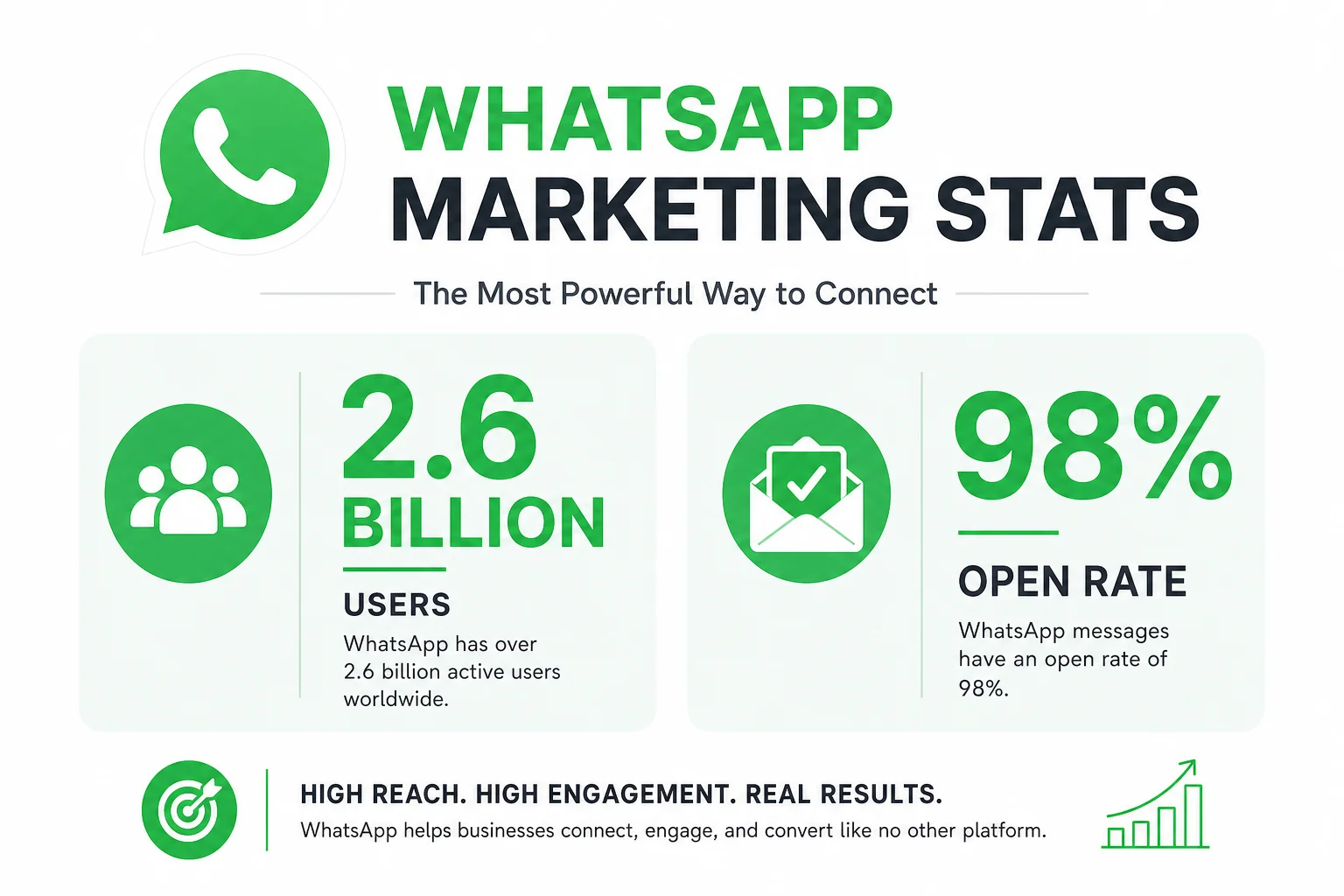
Let's start with the basics. WhatsApp currently has 2.6 billion active users worldwide, and in India it's practically embedded into daily life — people use it more than email, more than SMS, sometimes more than a phone call. That alone should tell you something.
But the number that really matters is the 98% open rate on WhatsApp messages. Compare that to email, where a 25% open rate is considered good, and you start to understand why businesses are doubling down on this channel. If you send 1,000 messages on WhatsApp, around 980 of them will get opened. The acquisition rate that comes from those conversations is between 45–60%, which is exceptional by any marketing standard.
For Indian businesses in particular, this is a channel you genuinely can't ignore. Your customers are already on WhatsApp. The question is just whether you're reaching them there in a systematic, automated way — or still doing it manually and losing potential leads in the process.
That's where tools like AiSensy and Wati come in. They sit on top of the WhatsApp Business API and give you a full platform to manage broadcasts, automate replies, run campaigns, and handle customer support across a team — all from a single dashboard. If you want to explore more ways to automate your WhatsApp workflows, check out 5 AI Tools for WhatsApp Automation That Actually Work in 2026.
What Is AiSensy?
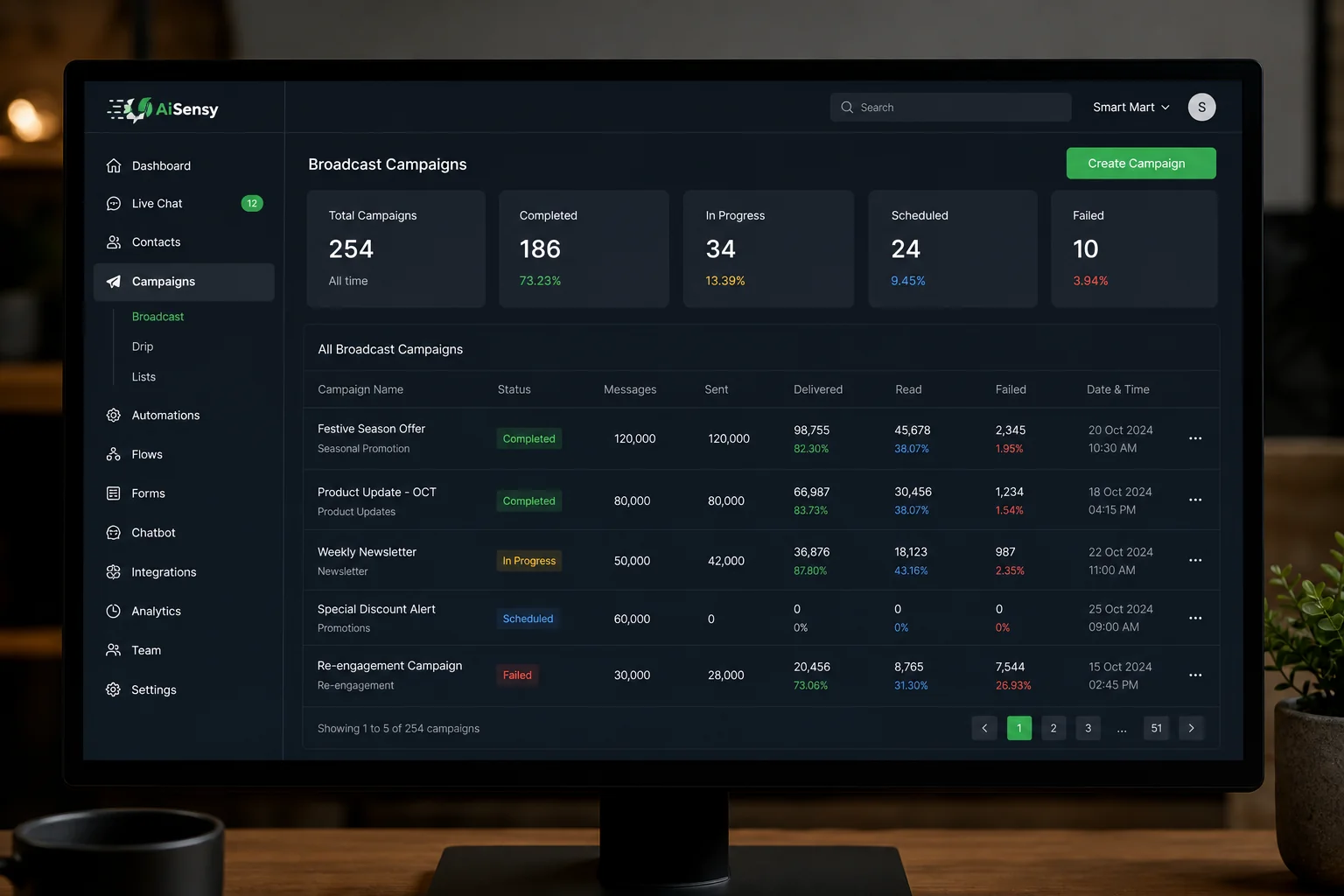
AiSensy is a WhatsApp Business API platform built primarily for marketing, sales automation, and customer support. It's an official Meta Business Partner, which means it has direct access to the WhatsApp Business API — you're not using any grey-area workaround here.
The platform is particularly popular with Indian SMEs, D2C brands, and agencies because of its competitive pricing and strong feature set for broadcast campaigns. If you're sending bulk messages, running Click-to-WhatsApp ads, or need a chatbot that automates responses — AiSensy handles all of that.
AiSensy Key Features
- Bulk broadcast messaging with audience segmentation and template management
- AI-powered chatbot builder for automated customer support and lead qualification
- Click-to-WhatsApp Ads integration with built-in retargeting (e.g., cart recovery)
- Drip marketing campaigns for lead nurturing via WhatsApp sequences
- Multi-agent inbox so your entire team can manage chats from one number
- Campaign analytics — delivery rates, open rates, click-through rates, ROI tracking
- AI Ads Manager and Template Generator for faster campaign creation
- Integration with Shopify, Zoho, and other platforms (at basic level)
One thing AiSensy does really well is onboarding support. They offer help via calls, Zoom, email, and live chat — which matters if you're new to the WhatsApp Business API and don't want to figure everything out on your own. That's a meaningful advantage if you're setting this up for the first time.
What Is Wati?
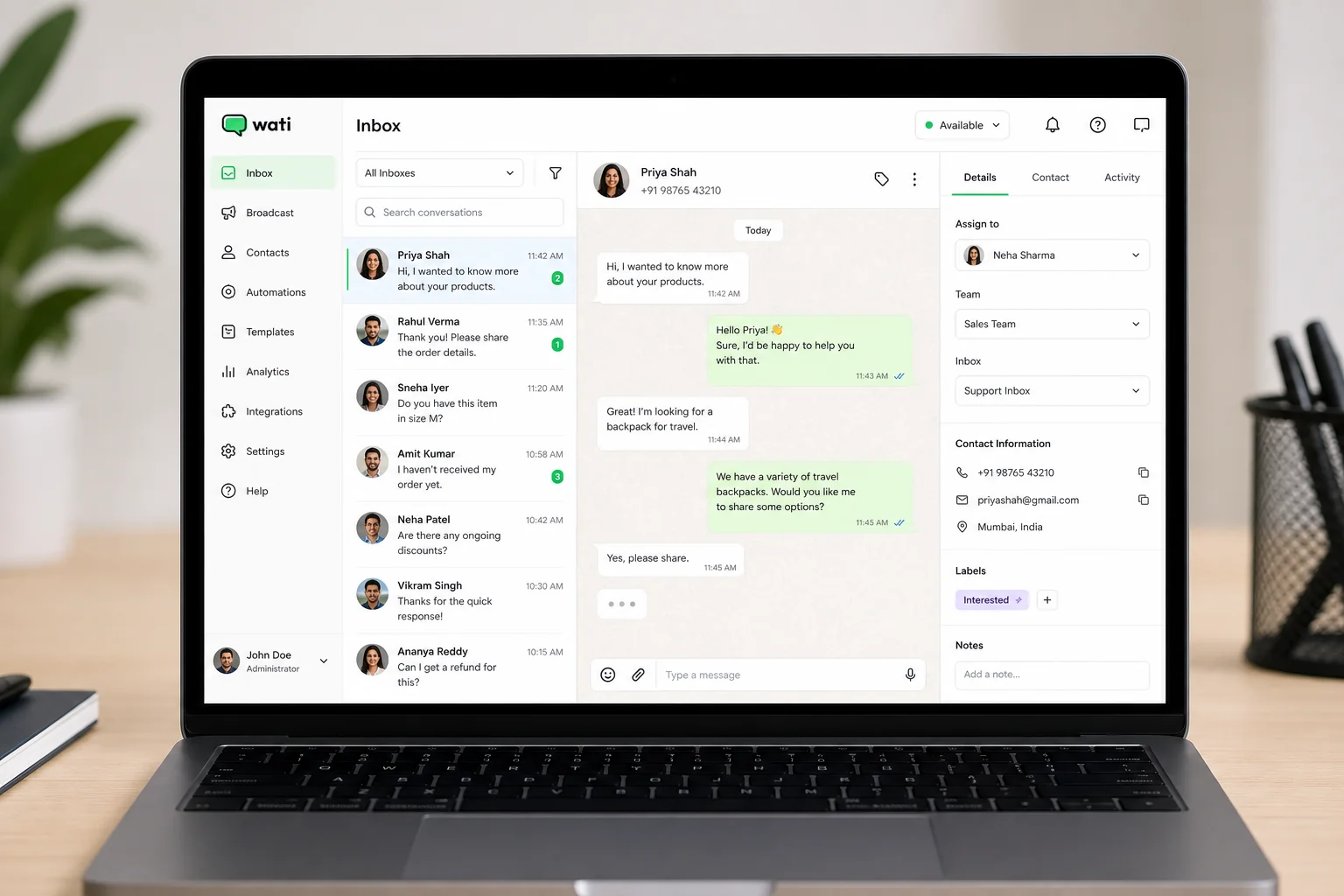
Wati (short for WhatsApp Team Inbox) was developed in 2016, originally to solve the problem of managing high-volume WhatsApp conversations across a team. It later evolved into a full SaaS platform and is now also an official WhatsApp Business API partner.
Where AiSensy leans toward marketing-first, Wati's strength is in customer service automation and CRM-style workflows. It's designed for businesses that need structured team pipelines, agent assignment, and detailed operational analytics — not just bulk broadcasts.
Wati is also particularly strong in the enterprise and e-commerce space, with deeper integrations into major platforms than most competitors offer.
Wati Key Features
- No-code chatbot builder with up to 200 automation steps per flow
- Team inbox with agent assignment — route conversations to specific team members
- Bulk messaging and broadcast campaigns with template support
- Full-fledged integrations with Shopify, HubSpot, Zoho, and other CRMs
- Agent performance analytics — response times, ticket resolution, conversation history
- Multi-user platform — multiple team members manage the same WhatsApp number
- Webhook and API support for custom workflow automation
- Works across desktop and mobile for team flexibility
Wati's positioning is a bit more enterprise-leaning. If your business already runs on HubSpot or Shopify and you want your WhatsApp operations tightly integrated with your existing CRM, Wati gives you that out of the box. It also has stronger operational reporting compared to AiSensy, which is more marketing KPI-focused.
AiSensy vs Wati: Feature-by-Feature Comparison
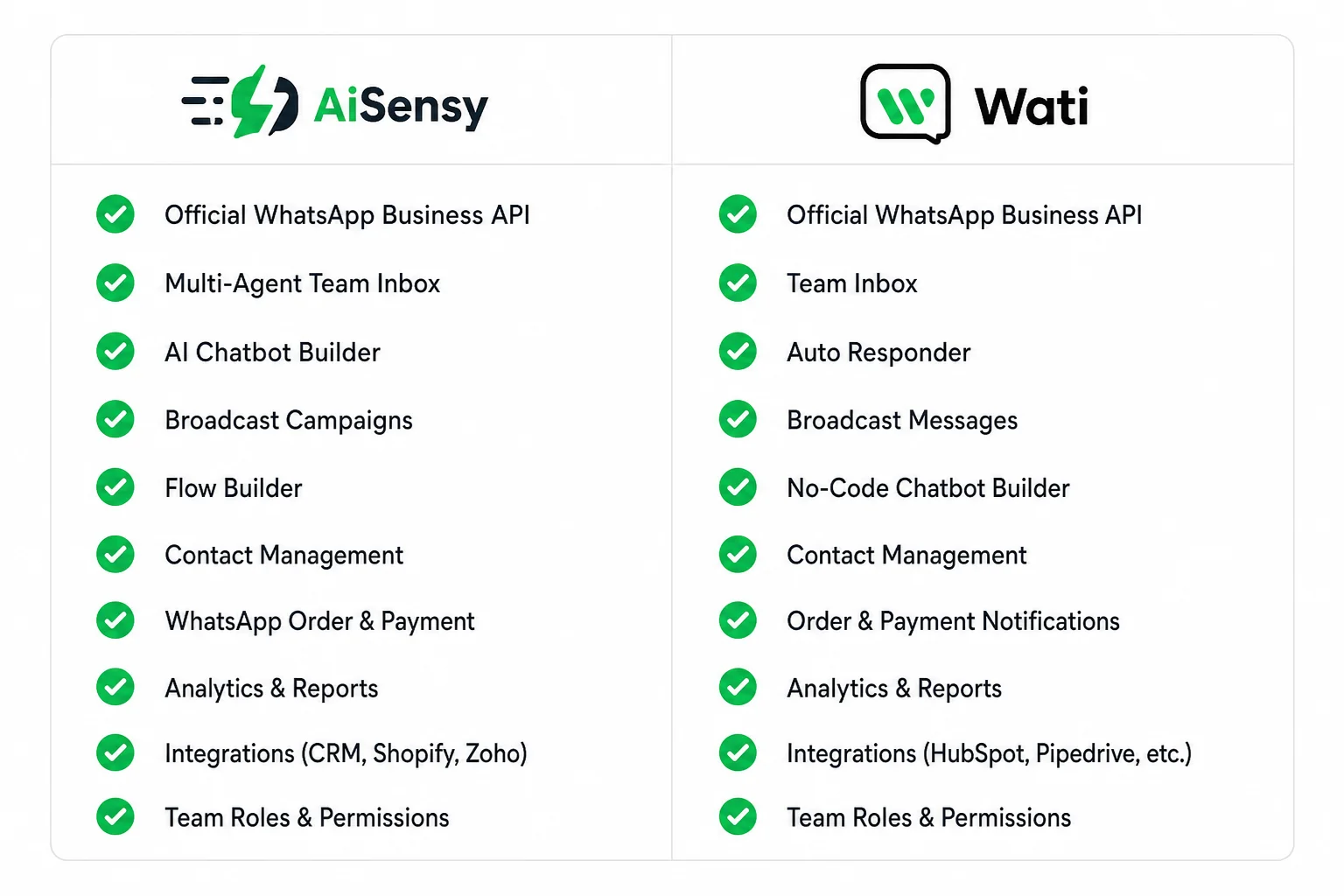
Here's where things get interesting. Both platforms do the same core job — they sit on top of the WhatsApp Business API and give you a dashboard to manage everything. But they diverge quite a bit when you go deeper.
Broadcast Messaging
AiSensy is built for high-volume broadcasts. The platform is optimized for speed of execution — segment your contacts, pick a template, fire the campaign. It also has built-in retargeting, meaning you can re-engage users who didn't click or respond to a previous message. Wati offers bulk messaging too, but without the native retargeting capability. If campaigns and broadcasts are your primary use case, AiSensy wins here.
Chatbot and Automation
Wati's no-code chatbot builder supports up to 200 automation steps per flow, which gives you a lot of room to build complex decision trees for customer support. AiSensy also has a chatbot builder and AI-powered automation, but Wati's flow depth is slightly more detailed. For advanced customer service automation, Wati has an edge here — but for quick-setup marketing chatbots, AiSensy is perfectly sufficient.
Multi-Agent Support
Both platforms support multiple agents handling the same WhatsApp number. AiSensy supports unlimited agents across its plans, which is a big deal if you have a growing team. Wati restricts agent access based on the plan tier — the basic plan only allows five agents. For larger teams on a budget, AiSensy gives more flexibility.
Analytics and Reporting
AiSensy focuses on marketing KPIs — delivery rates, open rates, click-through rates, campaign ROI. Wati covers all of that plus agent performance tracking — response times, ticket resolution, conversation history. If you're running a customer support team and need to monitor your agents' output, Wati's reporting is more complete. If you just want to know how your campaigns are performing, AiSensy covers it well. You can also pair either tool with broader AI automation workflows to reduce manual workload across your business.
Click-to-WhatsApp Ads
This is AiSensy's clearest differentiator. The platform has a full Ads Manager integration that lets you run Click-to-WhatsApp ads directly and track conversions end-to-end. Wati doesn't have a built-in Ads Manager, which means if paid campaigns are core to your marketing strategy, you'll have to manage that separately. For Indian businesses running Meta ads to WhatsApp — AiSensy is significantly better set up for this.
Pricing Breakdown: AiSensy vs Wati for Indian Businesses
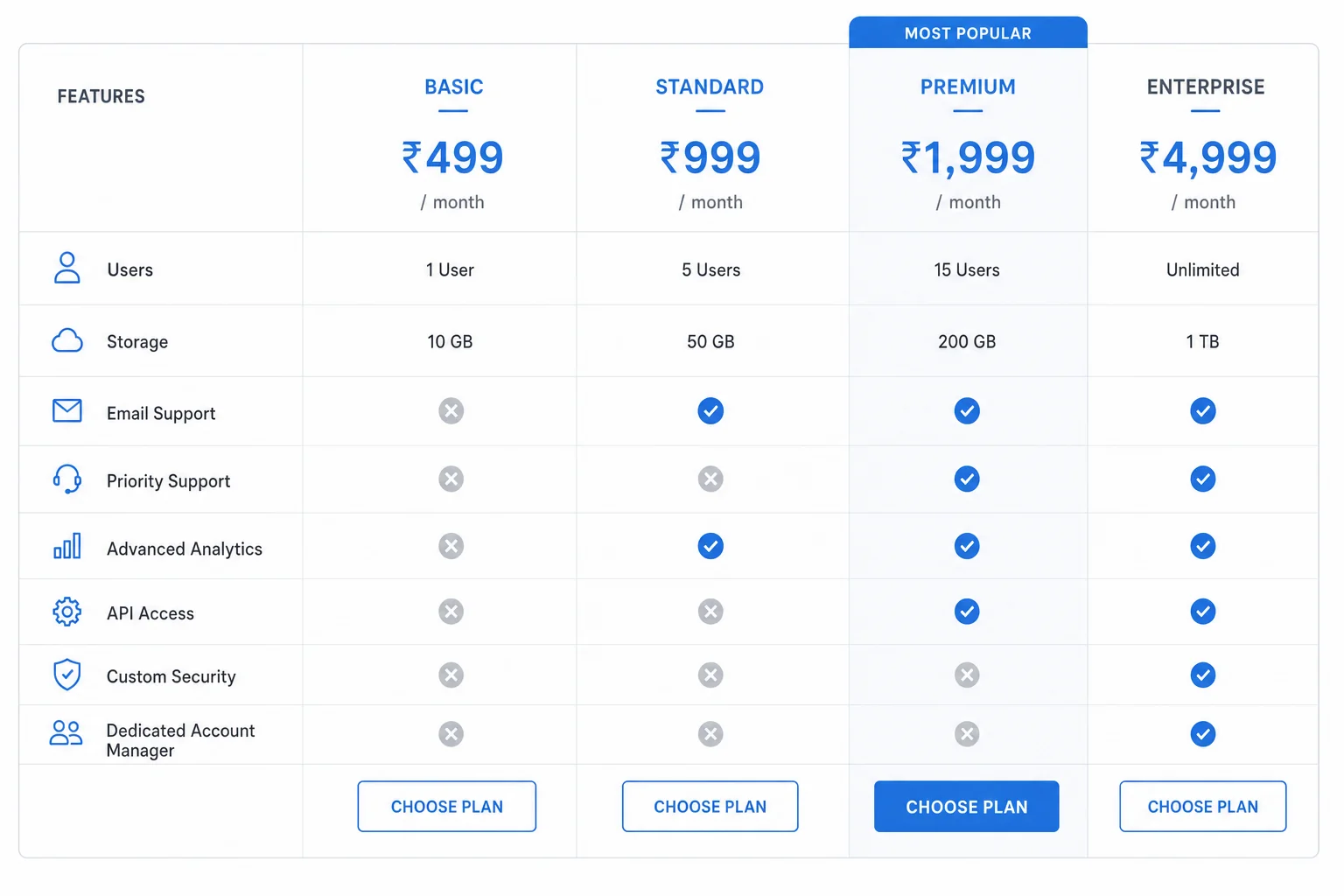
Pricing is where the gap between these two tools becomes very obvious — especially from an Indian market perspective.
AiSensy Pricing
- Free plan — Basic integration, connect your WhatsApp number, run simple campaigns
- Basic plan — ₹999/month — Full campaign management, template creation, broadcasts
- Pro plan — ₹2,399/month — Advanced features, deeper analytics, campaign optimization
- Custom/Enterprise — For 5 lakh+ messages per month; contact for a custom quote
The free plan is actually usable for getting started — you can connect your WhatsApp number and begin testing the platform before committing any money. At ₹999/month for the basic paid plan, AiSensy is positioned very aggressively for Indian small businesses. The per-message rate is around ₹1.04 per marketing message, which is competitive.
Wati Pricing
- Starter plan — ₹1,999/month — Basic messaging, limited agents
- Growth plan — ₹4,499/month — 5-user model, more automation features
- Business plan — ₹13,000+/month — Multi-user platform, full feature access
Wati's pricing starts at roughly double AiSensy's basic plan, and the jump to the multi-user tier is steep — ₹13,000+ per month is a significant commitment for an SME. Per message, Wati charges around ₹1.12 versus AiSensy's ₹1.04, which adds up at scale.
If budget is a constraint — and for most Indian businesses it is — AiSensy wins this comparison decisively. You get comparable features at a meaningfully lower price point. Compare this dynamic to other platform comparisons like GoHighLevel vs Systeme.io, where pricing often determines which all-in-one tool makes sense for your stage of business.
E-commerce Integrations: Where Wati Gets the Edge
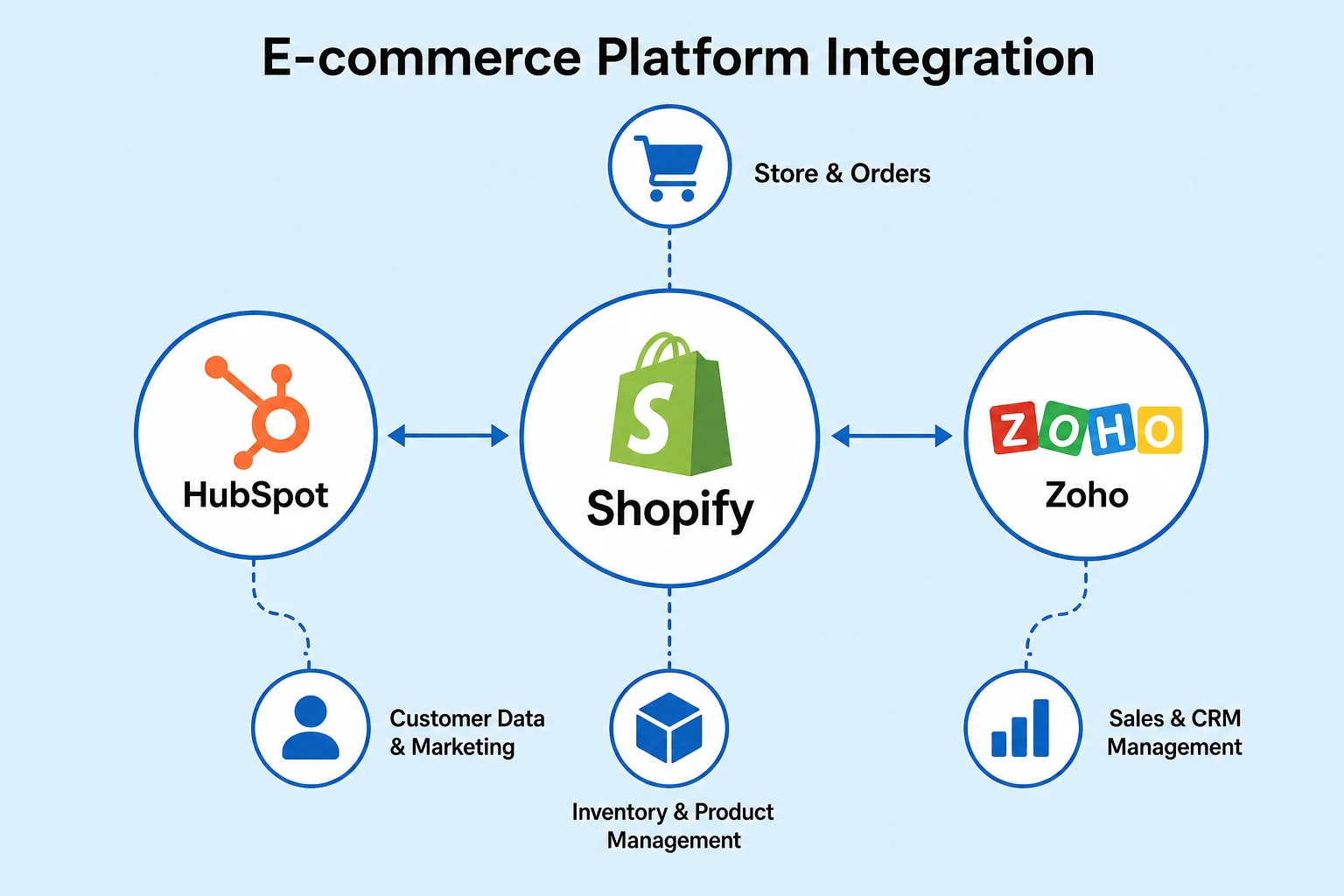
This is the one area where Wati clearly outperforms AiSensy — e-commerce and CRM integrations.
If you're running a Shopify store and want your WhatsApp marketing to plug directly into your order management, abandoned cart flows, and customer data — Wati gives you a full-fledged, native integration with Shopify. Same with HubSpot and Zoho. These aren't surface-level connections — they allow real-time data sync between your CRM and your WhatsApp conversations.
AiSensy has integrations with Shopify and Zoho, but at a more limited level. The data sync is shallower, and you may need to build additional automation through tools like Zapier or Make to achieve the same workflows that Wati handles natively. If you're running an e-commerce operation where WhatsApp needs to talk directly to your order pipeline, Wati is the stronger choice.
That said, for businesses not running e-commerce — service businesses, agencies, coaching businesses, local shops — AiSensy's integration level is more than enough. The depth of Wati's CRM connectivity only matters if you're actively using those platforms at scale. If you're looking at broader CRM options beyond WhatsApp, it's worth comparing your full marketing stack holistically before committing to either platform.
AiSensy vs Wati: Which Tool Should You Pick?
Here's the honest take: both platforms are good. Neither one is a bad choice. The decision really comes down to your specific situation.
Go with AiSensy if:
- You're a small or medium business in India and budget is a real factor
- Your primary goal is running broadcast campaigns and Click-to-WhatsApp ads
- You want unlimited agents without paying per seat
- You're new to WhatsApp Business API and want strong onboarding support
- You don't rely heavily on Shopify or HubSpot for your customer data
- You want a free plan to test things before committing
Go with Wati if:
- You run an e-commerce store on Shopify and need deep WhatsApp-to-CRM sync
- Your primary use case is customer support, not broadcast marketing
- You need detailed agent performance reporting for a support team
- Your business already runs on HubSpot or Zoho and you want native integration
- Budget is less of a concern compared to feature depth
For most Indian businesses — especially service businesses, local businesses, agencies, and coaches — AiSensy is the better starting point. It's cheaper, easier to set up, and does everything you need for WhatsApp marketing. Wati makes more sense if you're running a serious e-commerce operation where your WhatsApp needs to be deeply wired into your product catalog and order data.
And if you're considering building a more complete automated marketing system, you can pair either of these with a free open-source WhatsApp CRM for added flexibility without extra cost.
Quick Recap: AiSensy vs Wati at a Glance
| Factor | AiSensy | Wati |
|---|---|---|
| Starting price (India) | Free / ₹999/month | ₹1,999/month |
| Pro plan price | ₹2,399/month | ₹4,499–₹13,000+/month |
| Per-message cost | ₹1.04 | ₹1.12 |
| Multi-agent support | Unlimited agents | 5 agents (basic plan) |
| Broadcast campaigns | ✅ Strong, with retargeting | ✅ Good, no retargeting |
| Click-to-WhatsApp Ads | ✅ Built-in Ads Manager | ❌ Not native |
| Chatbot builder | ✅ AI-powered | ✅ No-code, 200+ steps |
| Shopify/HubSpot integration | Limited | ✅ Full-fledged native |
| Agent performance analytics | Basic | ✅ Detailed |
| Onboarding support | ✅ Calls, Zoom, live chat | Chat/email, 2–4 day response |
| Best for | SMBs, agencies, marketers | E-commerce, enterprise support teams |
Frequently Asked Questions
Is AiSensy better than Wati for small businesses?
For most small businesses in India, yes. AiSensy is more affordable, has a free plan to start with, offers unlimited agents, and provides strong broadcast and campaign features. Unless you specifically need deep e-commerce CRM integration, AiSensy gives you more value per rupee.
Does Wati work with Shopify?
Yes, Wati has a full native integration with Shopify, including real-time order updates, abandoned cart messages, and customer data sync. This is one of Wati's strongest advantages over AiSensy, which has only a limited Shopify connection.
Can I use AiSensy or Wati without the WhatsApp Business API?
No. Both platforms are built specifically on top of the WhatsApp Business API, which requires Meta's approval and a verified business number. Neither works with the standard WhatsApp or WhatsApp Business app — they require the API tier.
What is the cost of WhatsApp Business API in India?
The platform cost is separate from Meta's conversation charges. Meta charges per conversation — typically around ₹0.58–₹1.12 per conversation depending on type (marketing, utility, service). Your tool like AiSensy or Wati will add its own platform fee on top of that.
Which WhatsApp tool is best for running Meta ads?
AiSensy is the clear winner here. Its built-in Ads Manager lets you run and track Click-to-WhatsApp ads directly within the platform, including retargeting users who didn't convert. Wati doesn't have a native ad management feature.
Is there a free alternative to AiSensy and Wati?
Yes. There are open-source WhatsApp CRM solutions that work with the Meta API at zero platform cost. Check out this guide on setting up a free open-source WhatsApp CRM if you want to explore a no-cost route before committing to a paid platform.
Conclusion
The AiSensy vs Wati comparison comes down to one simple question: are you more focused on marketing campaigns, or customer support and e-commerce operations?
If it's marketing — broadcasts, Click-to-WhatsApp ads, drip campaigns, lead generation — AiSensy is your tool. It's cheaper, better supported, and built for the kind of WhatsApp marketing that most Indian businesses actually need.
If you're running an e-commerce store where WhatsApp needs to be tightly integrated with Shopify, HubSpot, or Zoho, and your team needs detailed agent-level reporting — Wati is worth the premium.
Either way, you're making a good choice just by moving away from manual WhatsApp management. The moment you have more than 50–100 contacts to handle on WhatsApp, automation through a proper Business API tool stops being optional and starts being essential.
Have questions about setting up either platform, or want to know which one works better for a specific use case? Drop your question in the comments — I reply to everything.